News

Do regulated companies truly have control over the traceability of their critical data?

In regulated industries, data that cannot be traced is considered unreliable by the authorities. Traceability is no longer an option, but an essential tool for ensuring compliance, product safety, and operational performance.

Traçabilité des données - conformité lors d'audit ou d'inspection

Table of Contents

Traceability is often perceived as a regulatory requirement or a simple tracking tool. However, in demanding sectors such as medical devices , life sciences , and food processing , as well as any other regulated sector, it is now a strategic pillar. At a time when regulatory requirements are becoming stricter and transparency is becoming a criterion for trust, data traceability is becoming a key element of industrial performance. When properly managed, it ensures quality, secures products, allows for effective responses to audits and inspections , and enables risk anticipation.

Traceability: Much More Than Just a Regulatory Buzzword

In its broadest sense, traceability is the ability to track, over time and space, the history, use, and location of a product or piece of data. When we talk about data traceability, we are referring to the ability to track the lifecycle of data—that is, every modification, deletion, or access to critical data: who did it, when, how, and why.

In regulated industries, this transparency is essential not only to ensure regulatory compliance (FDA 21 CFR Part 11, Annex 11, GMP, ISO), but also to safeguard product quality and anticipate risks.

Why is data traceability strategic?

1. Product Safety

In the pharmaceutical or food industries, incorrect data can have serious consequences: contamination, product recalls, and harm to the health of patients or consumers. Full traceability makes it possible to verify data before making decisions, trace the source of a problem, quickly identify the affected batches, and make informed decisions.

2. Regulatory Compliance

In highly regulated industries, data traceability is a regulatory requirement. It is mandated, in particular, to ensure data integrity, accessibility, and auditability. Data that cannot be traced is considered unreliable by the authorities.

3. Risk Mitigation and Crisis Management

When an incident occurs, being able to trace the lifecycle of data or a product is essential for analyzing its impacts. Effective traceability enables a rapid, precise response and often prevents crises that are costly both in terms of reputation and finances.

In 2023, more than 3,300 medical device recalls were recorded in Europe, nearly 24% of which occurred in France. This figure, which is rising sharply, illustrates the growing regulatory pressure and the need for reliable tools to manage risks—and in particular, traceability throughout the product lifecycle (source: Sedgwick, March 2024).

4. Continuous Improvement and Performance

Every piece of information captured by a traceability system becomes a source of analysis. By using the data to create and track metrics, recurring anomalies, or deviations, companies can refine their processes, improve quality, and boost efficiency.

Traceability at the Heart of International Standards

In regulated industries, data traceability plays a key role, going far beyond a mere industry recommendation—it is a requirement formalized by ISO standards. Standards such as ISO 9001 (quality), ISO 13485 (medical devices), ISO 22000 (food safety), and ISO 27001 (information security) all incorporate traceability as a cornerstone of process control. In other words, without traceability, there can be no compliance with international standards or demonstrable reliability during audits and inspections.

Traceability: A Cornerstone of the Quality Management System

In any quality management system (QMS), traceability plays a central role. It makes it possible to quickly identify the source of a nonconformity, assess its impact on processes and products, and define corrective and preventive actions (CAPA) to be implemented. In the event of a customer complaint, it ensures a prompt, well-supported, and fact-based response. It also serves as essential evidence of process control during audits or inspections. By ensuring the integrity and security of critical data, traceability strengthens the QMS and fuels the momentum of continuous improvement.

Discover GxpQMS, our quality management solution designed specifically for regulated environments. With built-in traceability, customizable workflows, and integrated CAPA management, GxpQMS helps you build a robust, compliant, and agile QMS.

More than just a tool—a foundation for long-term compliance

Faced with increasingly stringent regulatory requirements and growing pressure for data transparency, a platform with traceability built in from the design phase becomes a decisive advantage. With GxpManager, every piece of critical data is automatically tracked, documented, and secured. Thanks to a compliant audit trail, integrated electronic signatures, and workflows tailored to your processes, the platform ensures data integrity and operational consistency.

GxpManager thus stands out as a strategic, agile, and reliable partner, supporting regulated industries in their pursuit of compliance, performance, and trust.

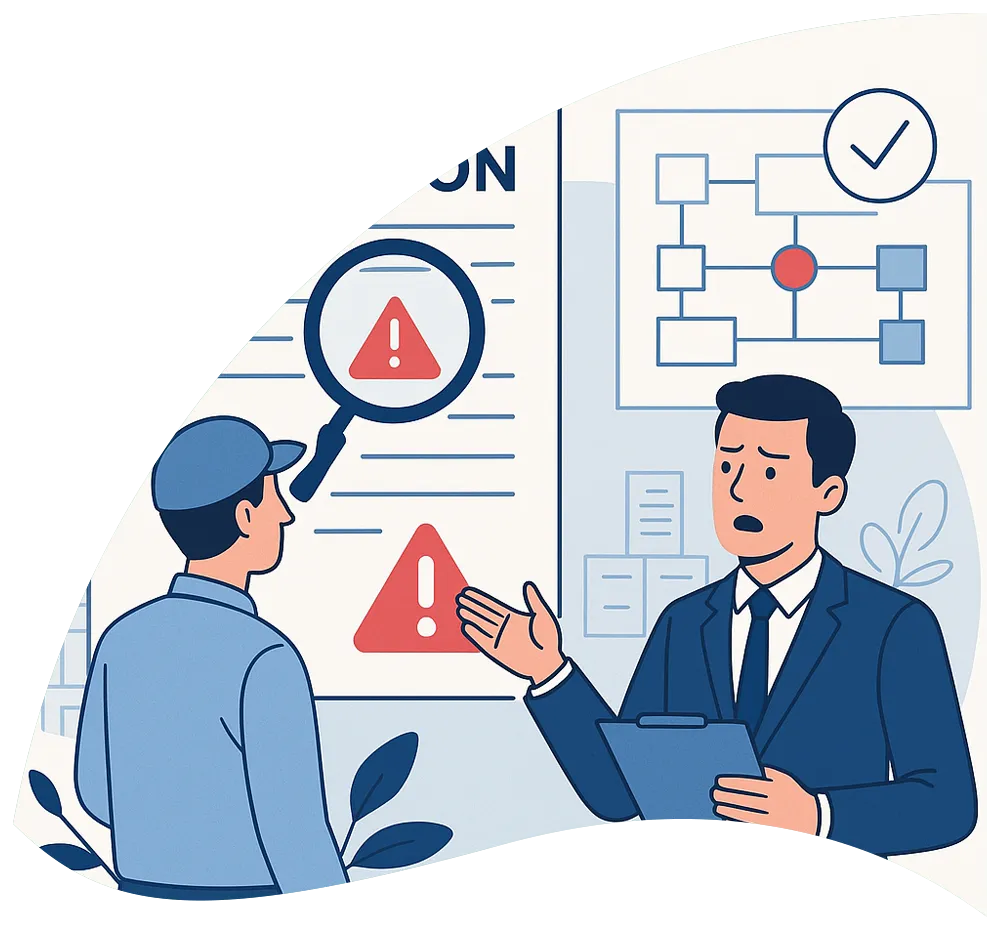
How should you respond when an inspection reveals a gap in data traceability?

When an inspection reveals a traceability issue, it is crucial to respond quickly and in a structured manner.

  1. The first step is to analyze the cause of the failure: Is it due to a procedural error, an unsuitable tool, or improper application of instructions?
  2. Next, the company must implement a corrective action plan that includes reviewing the affected processes, updating quality procedures, and, if necessary, strengthening data management tools.
  3. It is also essential to document all actions taken (CAPA) in order to demonstrate to the authorities a proactive and controlled approach.

A solution like GxpManager helps address these gaps in a sustainable way, thanks to built-in traceability, a reliable audit trail, and workflows aligned with your internal requirements.

Traceability: A Driver of Trust and Performance

In highly regulated industries, data traceability can no longer be viewed as a mere administrative requirement. It has become a true strategic lever for ensuring product quality, meeting regulatory requirements, managing risks, and improving operational performance.

Integrated at the heart of both internal and external processes through certified systems, traceability ensures transparency, responsiveness, and reliability at every stage of the critical data lifecycle.

With this in mind, GxpManager offers a platform designed to address the specific challenges of regulated industries: native audit trails, compliant electronic signatures, customizable workflows, and an approach centered on data integrity.

Choosing GxpManager means opting for a robust, scalable software ecosystem focused on data integrity, native traceability, and regulatory compliance—transforming your regulatory obligations into a genuine, sustainable competitive advantage.

Take control of the traceability of your criticaldata. With GxpManager, turn your regulatory requirements into drivers of performance and trust.

écran représentant la plateforme d'applications No Code Low Code GxpManager