News

Laboratory Equipment: How Can We Streamline Inventory Management and Maintenance?

Manage your lab equipment stress-free with digitalization.

équipement de laboratoire : maintenance compliquée

Table of Contents

Micropipettes, sequencers, microscopes worth several hundred thousand euros… Laboratories rely on a wide range of state-of-the-art scientific equipment.

Ensuring the quality of this equipment is essential for

  • Ensuring the reliability of analytical and experimental results
  • Preserving the longevity of instruments—which are often very expensive—and maximizing their return on investment
  • Comply with standards and certifications such as:
    The ISO 9001 standard, adopted by many laboratories to structure their quality management system
    The ISO 17025 standard for calibration and testing laboratories

Today, many laboratories still rely on manual methods, such as Excel® spreadsheets or paper forms, to track their equipment (inventory, preventive maintenance, corrective maintenance, etc.). Although familiar, these tools make management a tedious process. They increase the risk of human error and make it more difficult for regulated laboratories committed to a quality management system to comply with regulatory requirements.

This article explores the challenges laboratories face when tracking equipment and how digital equipment management provides an effective solution.

Laboratory Challenges

  • Lack of visibility into the status and history of equipment

The accumulation of equipment—often spread across multiple sites or departments—complicates centralized management and monitoring. Without a single, reliable database, it is difficult to quickly access important information, such as the date of the last maintenance or the current condition of the equipment.

  • High cost of equipment: the need for rigorous maintenance

Inadequate maintenance, in addition to the risks of breakdowns and inaccurate results, can also jeopardize the insurance coverage of certain devices.

  • Manual equipment management is time-consuming for equipment managers

Equipment monitoring and maintenance are often handled by technicians for whom this is not their primary responsibility. This distracts them from their core tasks and increases their workload.

  • An Obstacle to Regulatory Compliance

Traceability and data integrity related to equipment are essential criteria for obtaining quality certifications. With manual management methods, collecting evidence of compliance becomes labor-intensive and increases the risk of non-compliance.

In light of these challenges, digital equipment management appears to be an essential solution for

  • improve efficiency,
  • improve quality, and
  • optimize laboratory resources.
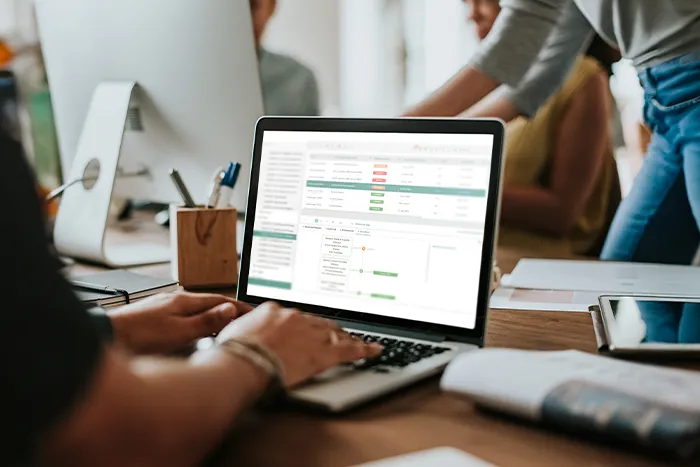
écran représentant la plateforme d'applications No Code Low Code GxpManager

How Digitalization Simplifies the Management of Laboratory Equipment

1. Workflow Automation

Automated workflows are at the heart of BPM (Business Process Management) tools, such as equipment management software. They make it possible to structure and automate every stage of an asset’s lifecycle, from acquisition to decommissioning. They ensure rigorous tracking and better coordination of maintenance tasks.

Thanks to these workflows, laboratories can:

  • Define specific processes tailored to each piece of equipment, including maintenance tasks, the teams responsible, and deadlines to be met…
  • Set up automated reminders and notifications: alerts via email or through the software interface.
    These alerts inform teams of the tasks to be performed (preventive maintenance, calibration, part replacement, etc.).
  • Track the progress of operations in real time: Digital management provides dashboards and key performance indicators. This enables real-time monitoring as well as customized reports to facilitate decision-making.

2. Features tailored to the needs of laboratories

Equipment management software allows you to assign accurate, centralized information to each device, making it easier to track them:

  • Identification and Responsibility (Equipment Inventory):
    • Identification of the device
    • Assignment of a person in charge
    • Identification number
    • Manufacturer registration,
    • equipment location
    • …
  • Preventive maintenance plan: creation of maintenance schedules
  • Tracking corrective maintenance
  • Certification management: tracking accreditations and calibrations to ensure compliance with standards.
  • Documentation: Immediate access to equipment operating procedures
  • Staff Qualification: Tracking user authorizations
  • Implementation of checklists: streamlining equipment inspections and maintenance operations.

3. Centralized data, enhanced collaboration

With a digital platform, all equipment-related information is accessible in one place. This promotes better coordination among teams, whether they are quality managers, technicians, or auditors. Centralized management eliminates information silos and improves responsiveness when problems arise.

4. Traceability, Data Integrity, and Data Security

Electronic signatures and audit trails enhance data traceability and integrity. Every action performed on a device is recorded with a detailed audit trail. This ensures compliance with regulatory requirements and facilitates audits.

SaaS software offers advanced protection against data loss or tampering through secure data storage.

Benefits of Digital Laboratory Equipment Management

By automating equipment management, digitalization delivers tangible benefits that improve the overall performance of laboratories while ensuring their regulatory compliance.

  • Increased operational efficiency for staff: refocus on your core business

Quality, HSE, and technical staff no longer waste time searching for information. Gone are the days of Excel® files or paper files. The entire equipment history (status, maintenance, calibrations, etc.) is accessible in just a few clicks via a centralized platform. This allows teams to focus on their scientific work and reduce time-consuming administrative tasks.

  • Financial Benefits: Cost Reduction and Extended Equipment Lifespan

Laboratory equipment represents a significant investment. Well-planned preventive maintenance using a digital system helps prevent costly breakdowns and operational disruptions. In addition, rigorous monitoring helps extend the service life of equipment, thereby optimizing the return on investment.

  • Simplified Certifications and Audits

For regulated laboratories or those seeking to implement a quality management system, digitizing equipment management has become essential. A digital solution ensures complete traceability, with instant access to compliance documents, service reports, and maintenance histories. During audits, all information is centralized and immediately available, simplifying the process and reducing the stress associated with regulatory inspections.

How GxpManager Helps You Improve Your Equipment Management

GxpManager develops applications dedicated to Quality, Safety, and Compliance. Our expertise is geared toward regulated sectors such as the life sciences: the pharmaceutical industry, biotechnology, medical devices, and research and production laboratories.

Gain de temps de 40% minimum en digitalisant vos processus métiers

At least a 40% time savings compared to manual methods

Our Applications for Laboratories

Take quality and safety in the laboratory to the next level with GxpManager applications

CUSTOMER CASE STUDY

Homme gerant l'inventaire des systèmes informatisés avec une application GxpManager

Inventory Management for Computerized R&D Systems

The custom-built application developed by GxpManager simplifies the management of the inventory process for computerized systems, suppliers, and equipment.

Conclusion

Maintenance of laboratory equipment is essential to

  • ensuring the reliability of results and
  • extend the equipment’s service life,
  • minimize costs
  • and ensure compliance with regulatory requirements.

Manual management using Excel® files or paper documents leads to

  • a lack of visibility,
  • a waste of time, and
  • an increased risk of errors or oversights.

With equipment management software, you can automate equipment tracking, centralize data, and streamline maintenance processes.

Don’t let managing your equipment be a burden anymore. With a modern digital solution, simplify your equipment inventory and maintenance while improving your performance. Focus on what matters most: innovation and scientific quality.