News

European Data Protection Day – GDPR

Everyone is aware of the importance of protecting personal data

Illustration - Journée européenne de la protection des données - RGPD

Table of Contents

Data Protection Day will take place on Saturday, January 28, 2023. Established in 2006 by the Council of Europe, its goal is to raise awareness among users about the importance of protecting their personal data. For businesses, this is an opportunity to take stock and ensure they remain in compliance with the law.

What is personal data?

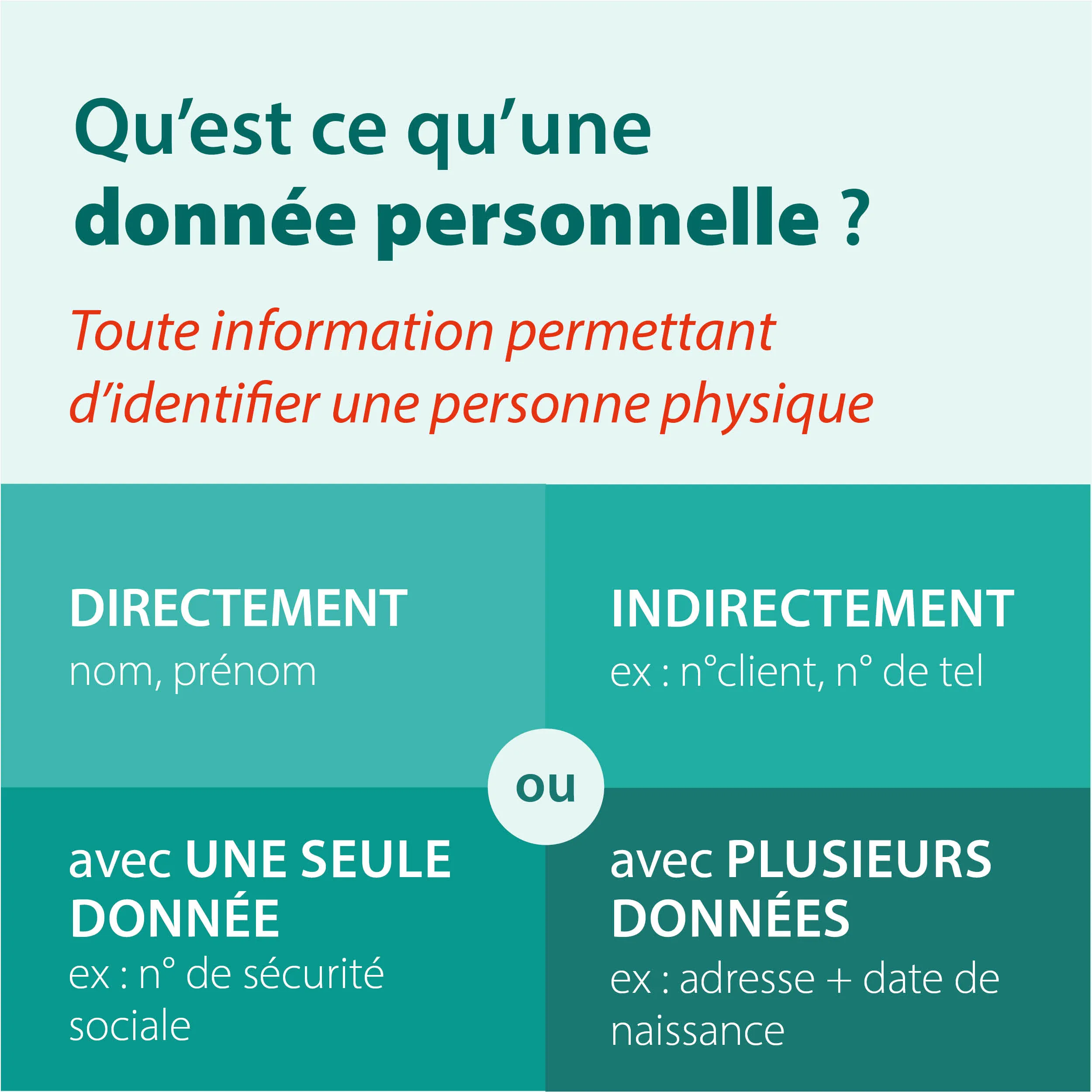
Personal data is information that can be used to identify a natural person. A person can be identified in several ways:

  • Directly (last name, first name)
  • Indirectly (examples: customer number, phone number, photo, etc.)
  • Based on a single piece of data (examples: Social Security number, DNA)
  • Based on the combination of multiple data points (example: date of birth + address)

Article 4 of the GDPR defines personal data as follows:

“any information relating to an identified or identifiable natural person; an ‘identifiable natural person’ is a natural person who can be identified, directly or indirectly, in particular by reference to an identifier such as a name, an identification number, location data, an online identifier, or to one or more specific factors specific to the natural person’s physical, physiological, genetic, mental, economic, cultural, or social identity;”

Personal Data vs. Sensitive Data

Often confused with other types of data, sensitive data is a specific category of personal data. Sensitive data is particularly at risk and is subject to enhanced legal protections. The processing of sensitive data is prohibited under the GDPR.

Article 9 of the GDPR defines sensitive data as data revealing:

  • Racial or ethnic origin,
  • Political opinions,
  • Religious or philosophical beliefs,
  • Trade union membership,
  • genetic and biometric data for the purpose of uniquely identifying a natural person,
  • Health-related data
  • Data concerning sexual life or sexual orientation

What is the GDPR?

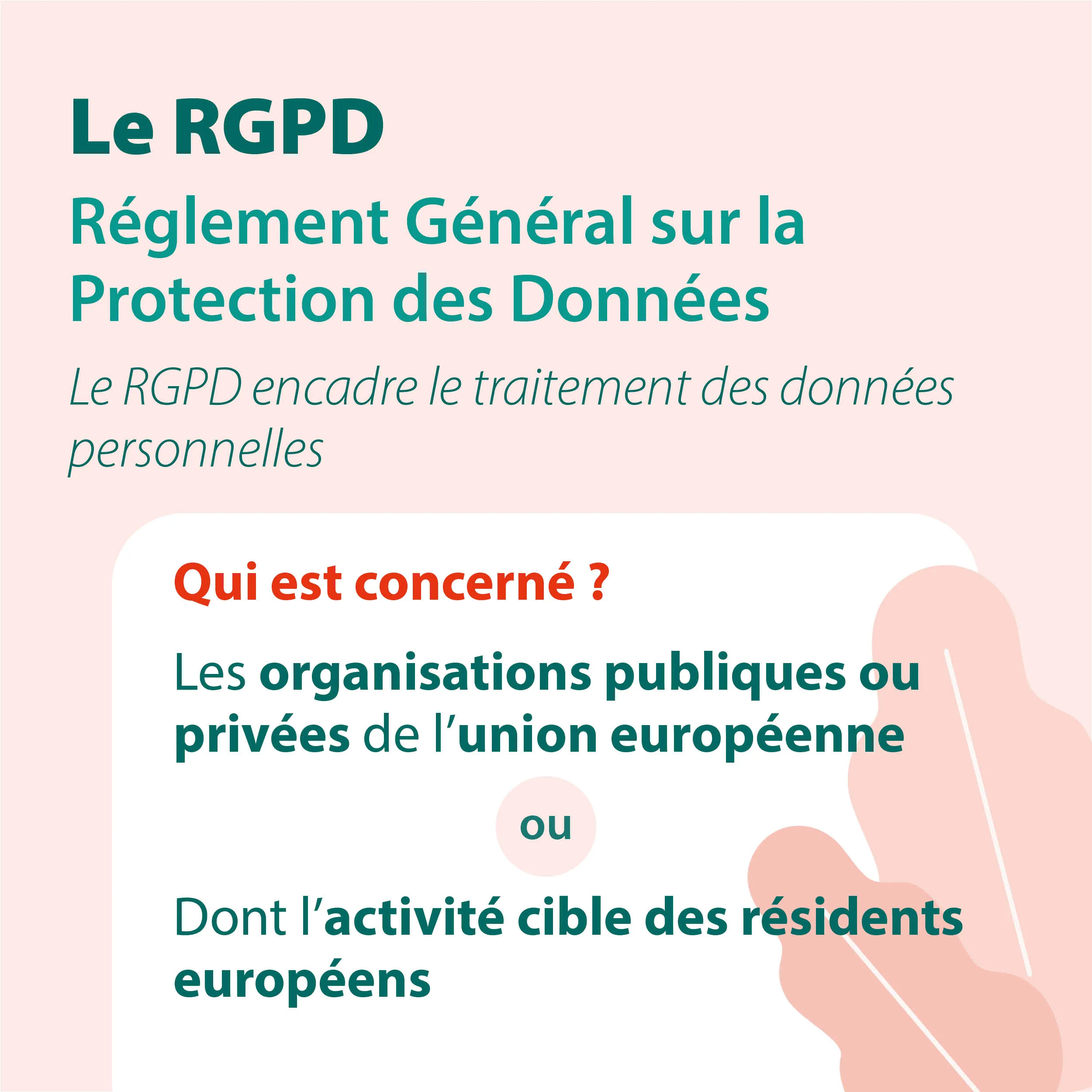
The General Data Protection Regulation governs the processing of personal data within the European Union. It took effect on May 25, 2018, and harmonizes rules across Europe. It has two objectives:

  • To protect and facilitate users’ rights
  • Hold organizations that process personal data accountable.

Who is affected by the GDPR?

Any organization, regardless of its size, country of operation, or business activity, may be affected. In fact, the GDPR applies to all organizations, both public and private:

  • Established within the European Union,
  • or whose business directly targets European residents.

Non-European companies therefore have the same obligations when they offer products or services to European residents.

Regulatory Bodies

In France, the CNIL is the administrative authority responsible for ensuring compliance with the GDPR. Its European counterpart is the European Data Protection Board (EDPB).

Roles of the CNIL

  • Inform individuals and professionals and protect individual freedoms
  • Supporting organizations in their efforts to comply with the GDPR
  • Anticipating ethical data challenges and fostering innovation: The CNIL, working alongside businesses, contributes to research in the field of privacy and personal data.
  • Monitoring organizations

Best Practices for GDPR Compliance

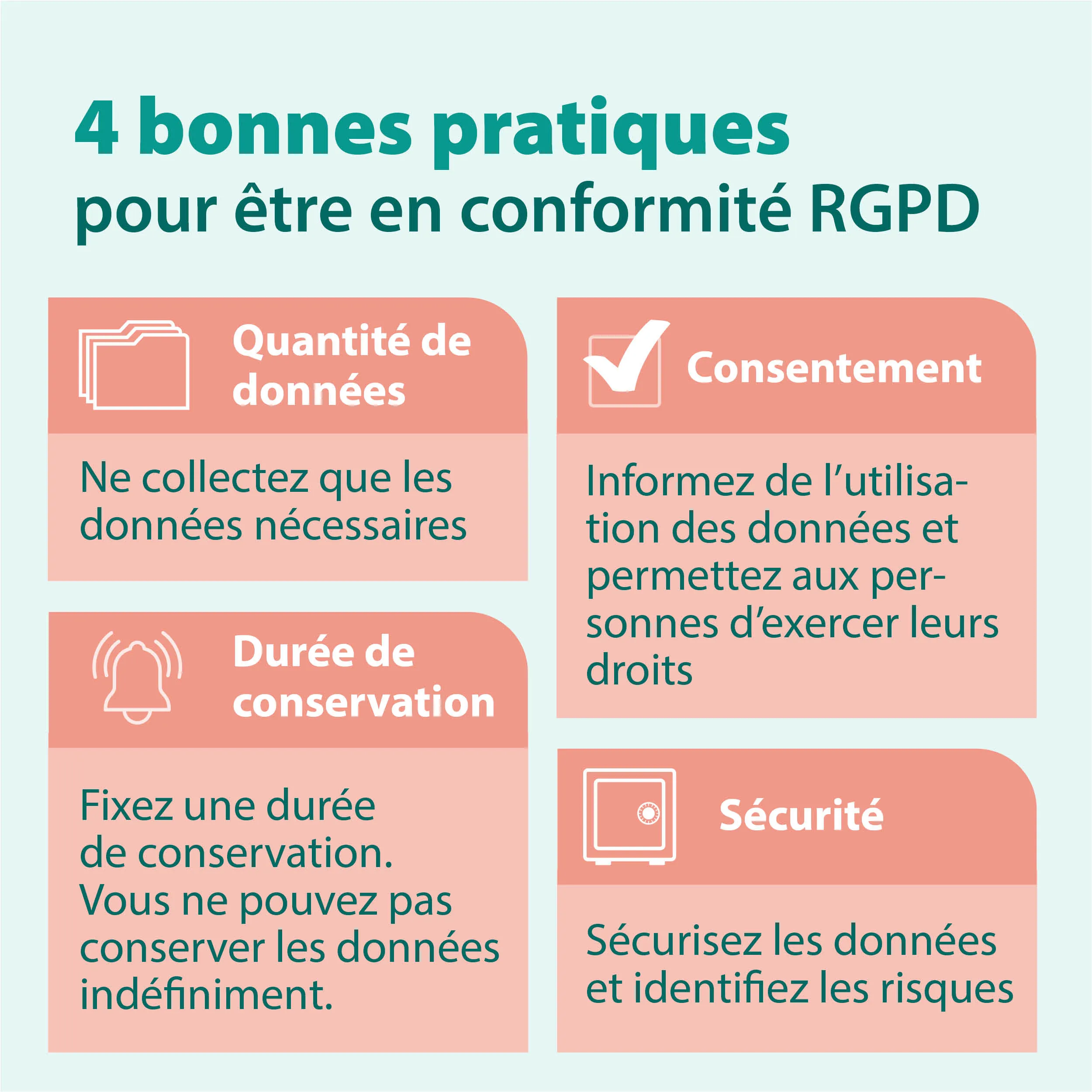
If personal data is not central to your business, achieving GDPR compliance is fairly straightforward. To do so, follow these best practices.
– Source: CNIL –

Ne collectez que les données vraiment nécessaires
Les données que vous conservez doivent être strictement nécessaires à l’exercice de votre activité. Ne récoltez aucune donnée “sensible”. Si ce n’est pas le cas c’est l’occasion de faire le tri dans vos données !
Soyez transparent
Les personnes doivent consentir à l’utilisation de leurs données pour que puissiez les utilisez. Cela suppose qu’ils soient clairement informés de la collecte et de l’utilisation de leurs données. Le RGPD impose que le consentement soit “libre, spécifique, éclairé et univoque”. Le consentement “par défaut” n’est donc pas toléré.
Facilitez l'exercice des droits des personnlles
Les individus (clients, prestataires, salariés…) doivent conserver la maîtrise des données qui les concernent. Organisez des modalités permettant aux personnes d’exercer leurs droits et répondre dans les meilleurs délais à ces demandes. Pour les abonnés à votre liste email, par exemple, prévoyant un formulaire de désinscription et de mise à jour accessible facilement.
Fixez des durées de conservation
Vous ne pouvez pas conserver les données indéfiniment. Il convient de définir le cycle de vie de la donnée. Dans la plupart des cas, la durée de conservation des données n’est pas fixée par une règle définie. C’est à l’entreprise de définir une durée pertinente.
Sécurisez les données et identifiez les risques
La sécurité des serveurs doit être une priorité. Limitez les accès et gérer les réseaux wifi. Utilisez des mots de passe sécurisés. Effectuez des mises à jour et sauvegardes régulières. Sécurisez vos sites web. Sécuriser vos archives. Répliquez vos données pour éviter les pertes. En cas de disparition des données, un plan de reprise des activité est à prévoir. Assurez la confidentialité et l’intégrité des données e, cryptant les données.

CNIL Inspections and Penalties

The CNIL may verify that companies processing personal data are complying with the law.

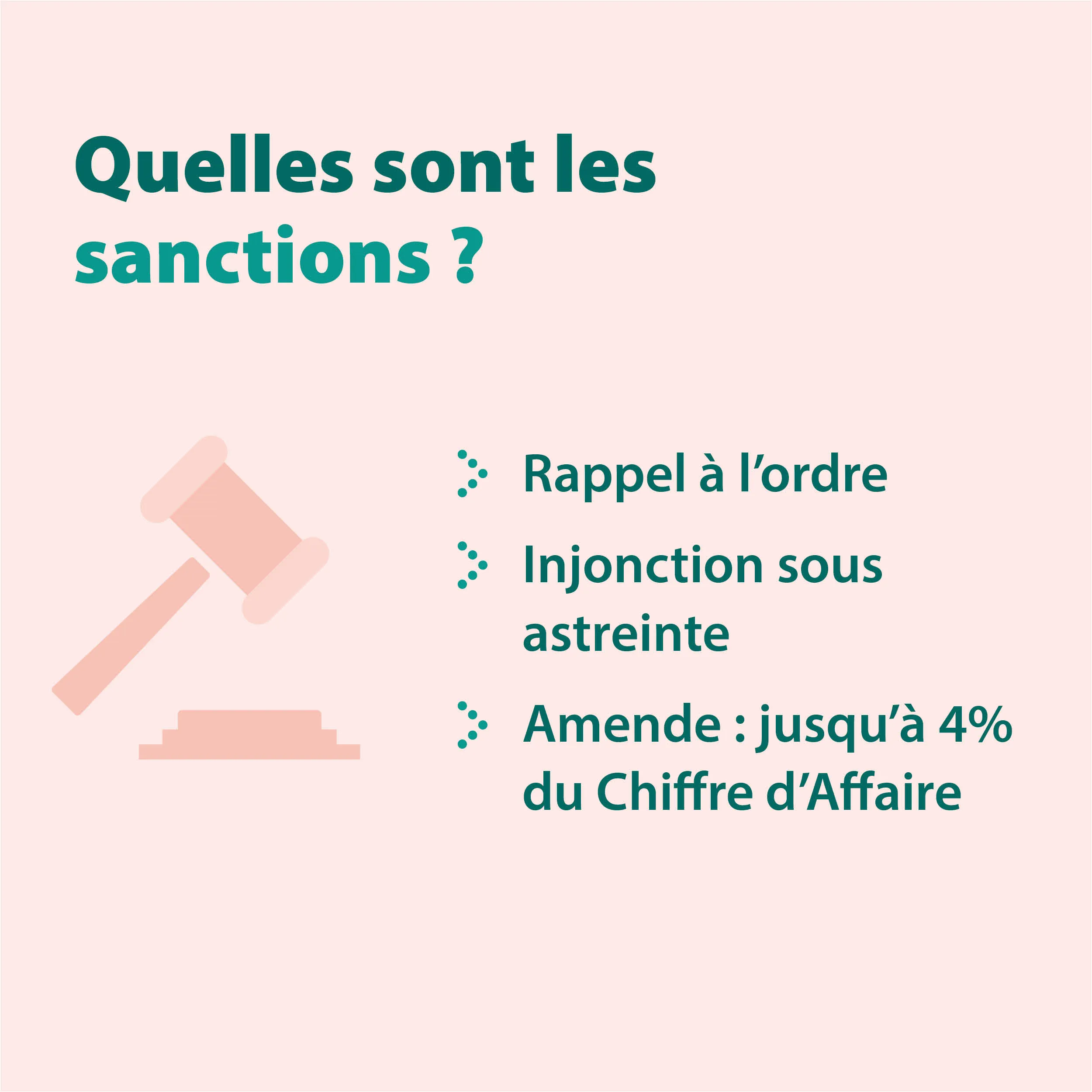
  • Warning and Formal Notice
    : This is not a sanction but a corrective measure.
  • Injunction with a penalty payment: This is an order to comply, accompanied by a sum to be paid in the event of non-compliance with the decision.
  • Penalty: A fine of up to 20 million euros or, for a company, up to 4% of global revenue.

The GAFAM companies are not spared. In January 2022, the CNIL fined Google 150 million euros and Facebook 60 million euros for failing to comply with cookie management rules. Their procedures do not make it as easy to refuse cookies as it is to accept them.

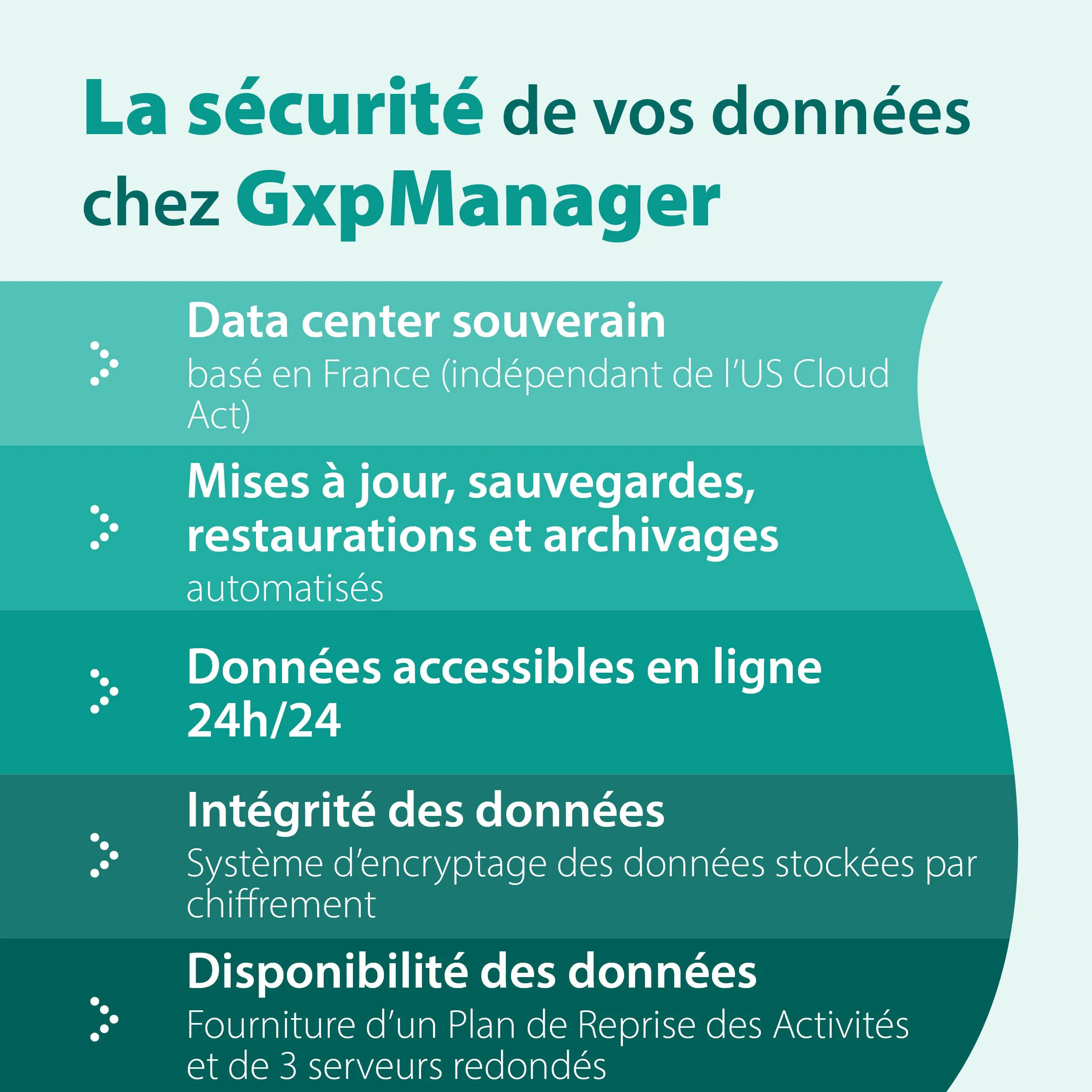
The Security of Your Data at GxpManager

Data security of your data is part of the GxpManager platform’s DNA

  • Our sovereign data center is located in France. We chose a European hosting provider so as not to expose our customers to the legal and financial risks inherent in working with U.S. providers, which are subject to extraterritorial laws such as the Cloud Act
  • Updates, backups, restores, and archiving are automated.
  • Your data is accessible online 24 hours a day
  • The integrity of your data is ensured through a system that encrypts stored data
  • Data Availability: Provision of a Disaster Recovery Plan (DRP) with very high availability and three redundant servers