News

How Can You Handle Non-Compliance
s Through Optimized Digital Management?

In regulated industries such as pharmaceuticals, medical devices, andfood and agriculture, any non-compliance can jeopardize product quality, patient safety, or regulatory compliance.

Gestion traditionnelle et digitalisée des non-conformités

Table of Contents

If you are an executive, a quality manager, or a QHSE manager, managing nonconformities is an integral part of your job. You are therefore looking for the best way to streamline the process and handling of nonconformities.

A nonconformity indicates a failure in a process or product, meaning that the expected results do not meet the initial requirements.

In regulated industries, implementing a nonconformity management system is a priority to ensure continuous improvement.

What is a nonconformity?

A nonconformity refers to any situation in which a process, product, or service deviates from specified requirements—whether internal (SOPs, quality specifications) or external (ISO standards, regulations such as CFR 21 Part 11 or ICH Q10). This could be a non-conforming batch, a procedure that was not followed correctly, improperly calibrated equipment, or a deviation detected during an audit.

Effectively managing nonconformities is therefore a strategic imperative, both for quality control and for regulatory compliance.

Quality Management: How to Handle Nonconformities

The life cycle of a nonconformity consists of several steps to ensure optimal management and resolution.

1. Detection of Nonconformity

Any stakeholder in the company can identify a nonconformity. Stakeholders include: customers, suppliers, external and internal auditors, employees, and government agencies, among others.

Nonconformities may be identified during internal or external audits, quality controls, customer complaints, or complaint analyses.

When a nonconformity is detected, it is important to clearly describe it and provide the information needed for the report, such as documents indicating what should have been done, but was not, evidence demonstrating the nonconformity, the date, and the person who identified the nonconformity.

2. Declaration of Nonconformity

The report provides detailed information regarding the nonconformity, including a description that may be based on the QQOQCP or 5M method.

When reporting, it is important to determine whether immediate action (correction) can be taken to resolve the nonconformity as soon as possible.

In fact, when a nonconformity is reported, it is important to follow a two-step process:

  • Controlling the problem to reduce risks—that is, by notifying the customer, isolating the product, or immediately revising the affected process.
  • In this case,immediate corrective action consists of implementing the necessary steps to bring the product or process back into compliance.

3. Handling Nonconformities by Quality Assurance

It is important to include the date the QA department took charge of the nonconformity in the nonconformity management process. The QA department will implement immediate corrective action, if necessary, and provide a description of that action, noting whether or not action has already been taken.

QA will validate the reported information and initiate the review and analysis of the nonconformity.

4. Review and Analysis of Nonconformities

This step is important to prevent the nonconformity from recurring in the future. In fact, the root cause must be identified, and several factors must be determined:

  • impact on product quality (product of the affected process)
  • Recurrence
  • Root cause
  • If necessary, CAPA

5. Creation of CAPAs

Planning for corrective and/or preventive actions is determined based on the nonconformity analysis. It is necessary to identify the individuals responsible for implementing them and establish a timeline for their implementation.

6. Final Evaluation and Closure of the Nonconformity

In the Quality Management System, this is one of the key phases. It allows us to determine whether the corrective and preventive actions implemented were effective or not. The closure of a CAPA involves notifying the person who reported the nonconformity with a CAPA report and a conclusion.

If no CAPA was necessary, the nonconformity is closed during the review and analysis, and stakeholders are notified.

Quality Management: Digitizing Nonconformity Management

Too many companies still manage their nonconformities using Excel spreadsheets, emails, or paper documents, which increases the risk of information loss, a lack of traceability, and delays in corrective actions.

With GxpManager, you can structure the entire non-compliance lifecycle: from detection to closure, including root cause analysis and the implementation of CAPA (Corrective and Preventive Actions). Each step is tracked, monitored, and validated.

Non-compliance: Prevention Is Better Than Cure

GxpManager helps you implement a proactive approach: tracking trends, issuing alerts for recurring deviations, and integrating with risk management processes.

You reduce costs associated with non-conformance, minimize non-conforming products, and increase customer satisfaction.

An eQMS: What Are the Benefits for Your Business?

Reduction in the number of recurring nonconformities.

Improved regulatory compliance (ISO, GMP, FDA, etc.).

Improved responsiveness and collaboration among teams.

Comprehensive audit trail for inspection or quality audit.

Dashboard with real-time data to monitor your quality KPIs.

Schedule a GxpQMS demo and discover how our platform can transform your nonconformity management, strengthen your regulatory compliance, and accelerate your quality performance.

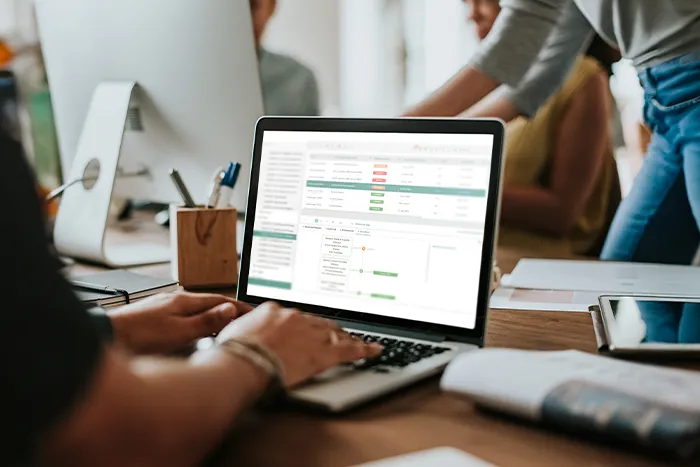
écran représentant la plateforme d'applications No Code Low Code GxpManager